First, count honestly
Every shoe pile is a counting error. The household that swears it owns a dozen pairs walks past thirty every morning: the season's rotation by the door, last season's in the closet floor, the occasion shoes in boxes, the running shoes in the car. So before any furniture, do the census: everyone's everything, one evening, one list. The number will surprise you, and it decides everything below.
Then measure the wall. Not the hallway, the wall: the flat run where storage can actually stand, minus door swings and radiator. Depth matters more than you expect: a storage piece deeper than about 13 inches starts to own a narrow hallway instead of serving it, and that is the reason everything on the HOMIDEC shoe storage shelf runs slim.
The three camps, and who each one is for
| Type | Capacity | Best for | The trade |
|---|---|---|---|
| Clear stackable boxes | 1 pair per box, stacks to fit | Sneaker care, seasonal rotation, closet shelves | Cost per pair is highest; visibility and protection are total |
| Modular cabinets | 16 to 48 pairs | Families, hallway walls, dust-free storage | Needs assembly; hides shoes behind doors |
| Tier racks | 20 pairs in a 10-tier strip | Daily rotation, rentals, narrow strips of wall | Open air: fast to grab, visible to guests |
Clear boxes: storage that shows its work
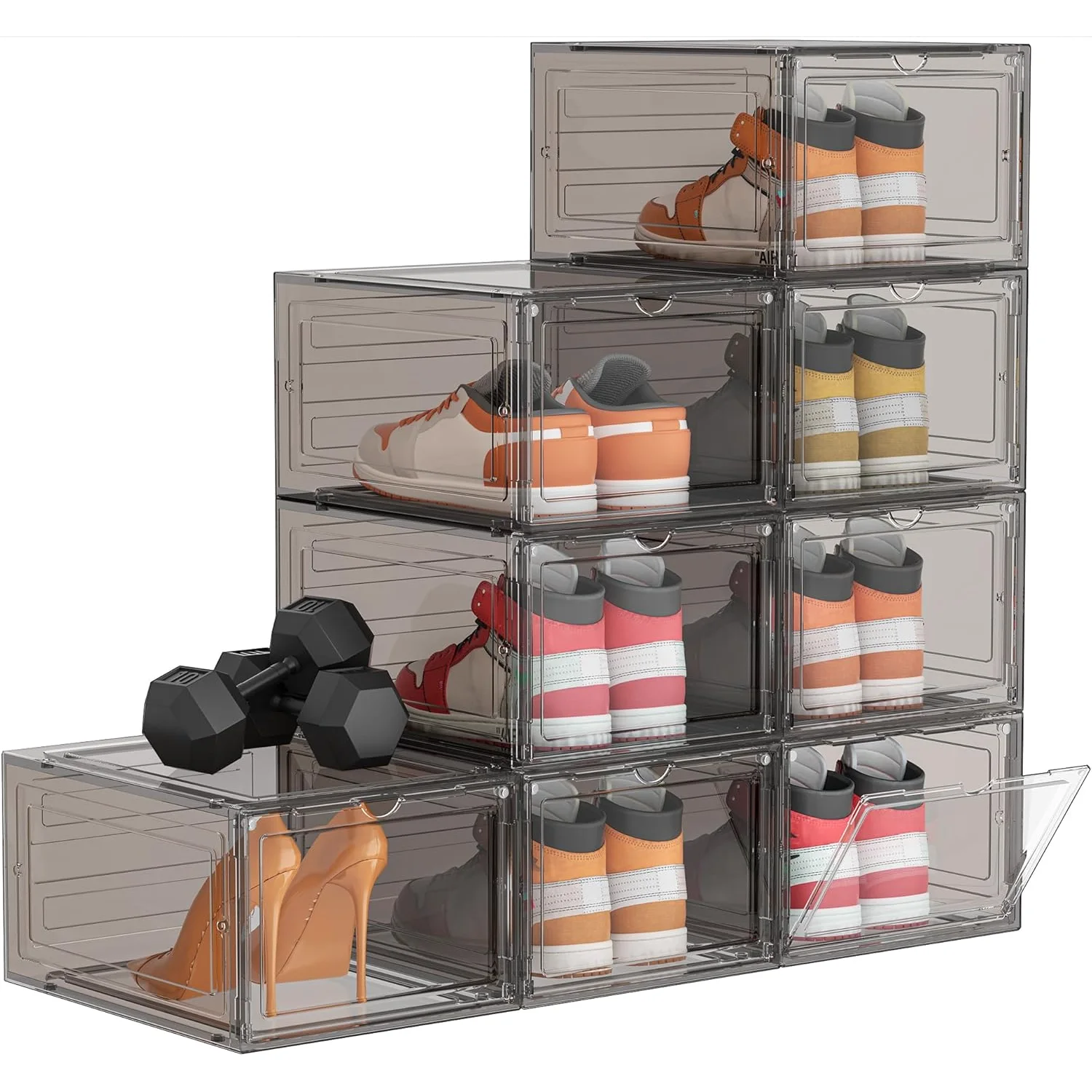
The stackable boxes are the connoisseur's answer. Each pair gets a hard shell with a drop-front door and ventilation, the clear panel means no labels and no archaeology, and the stack rebuilds to fit whatever shelf or floor strip you have. The maker specifies fit up to a US men's 12, the doors hold closed with magnets, and the boxes carry a stated stacking rating, so a column stays a column. They come in 6, 8 and 12-packs, plus an XL cut for boots and high-tops. If your shoes are an investment or a collection, this is their apartment building.
Cabinets: the family-scale answer
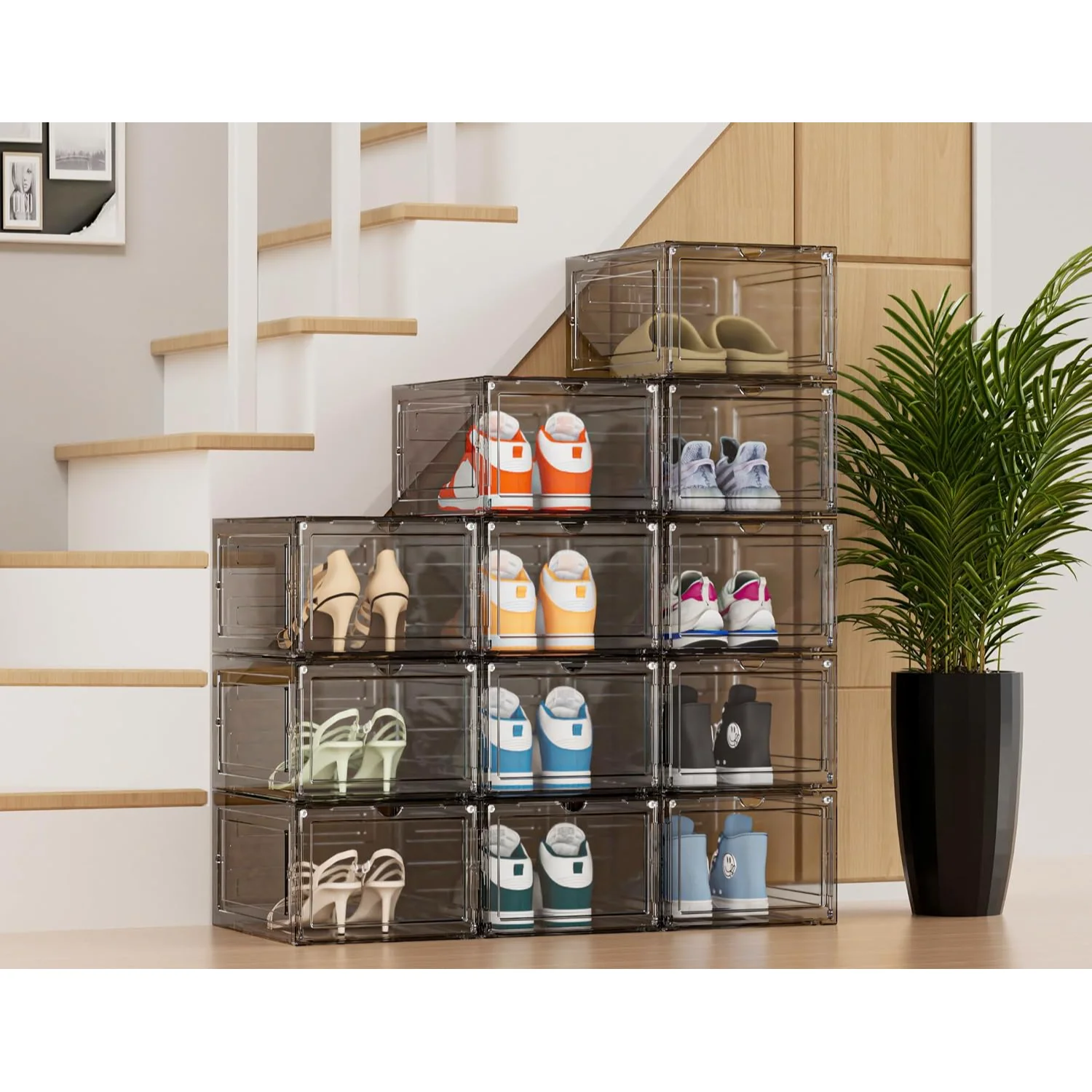
The modular cabinets take the cube-storage idea and shape it for shoes: plastic panels, steel connectors, angled shelves behind doors, in 16, 24, 32 and 48-pair builds. The 2-by columns keep depth around a foot, so even the 48-pair build reads as a slim wall unit rather than a wardrobe. Doors matter more than they sound: they keep street dust off forty pairs, and they turn the front of the cabinet into the one tidy surface a hallway gets. Assembly is the familiar hammer-and-connector hour, and the columns anchor to the wall like any tall furniture should.
Tier racks: maximum pairs, minimum ceremony
The 10-tier rack is the pragmatist's strip: twenty pairs in a column narrower than a doormat, every pair one reach away, nothing to open. It is the right answer for the shoes you wear weekly, and the wrong one for the suede you love, which belongs in a box upstairs. Most sorted households end up with exactly that split: a rack for the rotation, boxes for the collection, and the difference is visible in a week.
The seasonal rotation, scheduled
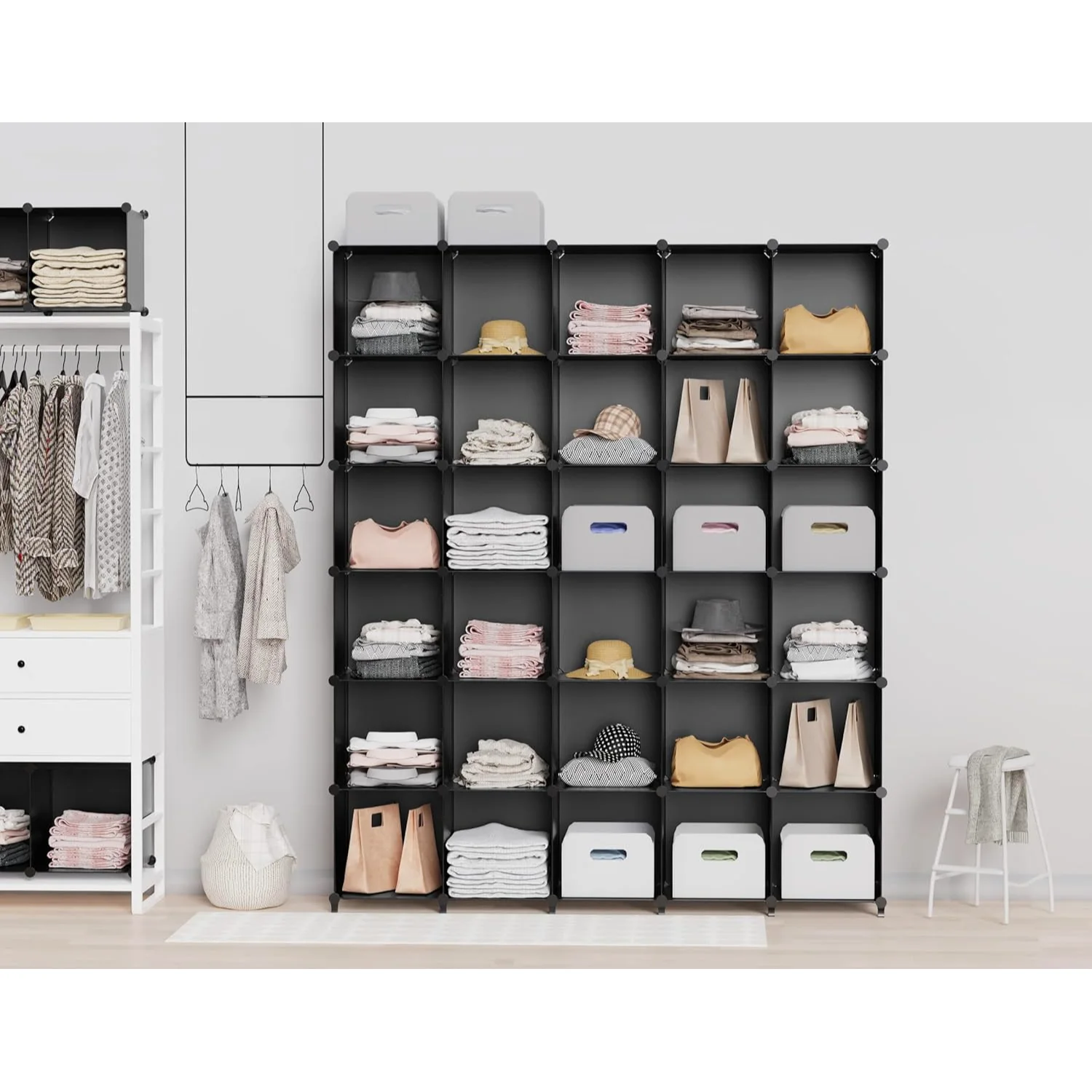
Whatever furniture you pick, the pile returns unless the seasons move. The routine that works is two swaps a year, fifteen minutes each: at the turn of spring and autumn, this season's pairs come down to the rack or cabinet, last season's go up into clear boxes, visibly labeled by being visible. The cube planner makes the same point about clothes: storage systems fail on capacity, but they die on routine. Two swap dates in the calendar keep this one alive.
What we tell you before the buy button does
Prices on every option above are figures from our latest scheduled update, dated once on the methods page; anything unpriced says so instead of guessing. And every capacity number on this page is the maker's own specification, which is exactly what our editorial policy requires of a claim. The rest of the HOMIDEC catalogue solves the rooms past the hallway: cubes for the closet that overflowed, racks for the coats that caused it.
Sources opened and read on 2026-08-07: American Academy of Pediatrics, Preventing Furniture and TV Tip-Overs (HealthyChildren.org); EPA ENERGY STAR, Low- to No-Cost Tips for Saving Energy at Home.